

Have you ever wondered about the real effects of Anti-Wrinkle treatments in the face over time? Let’s delve into an extraordinary case that sheds light on this. Dr. Binder’s unique study of identical twins, one who regularly received the treatments and the other who did so only sporadically, offers us fascinating insights.
These twins, 44 years old at the time of the end of the study, have led similar lives but with one key difference in their routines: their use of anti-wrinkle treatments. The regularly treated twin, residing in sunny Los Angeles, has been receiving the treatments in her forehead, glabella (the area between the eyebrows), every 4-6 months for the past 19 years. Over the last 8 years, she also treated her crow’s feet.
In contrast, her twin sister, living in Munich with its more moderate UV exposure, has only had four treatments over the same period, at intervals of 2, 9, and 13 years.
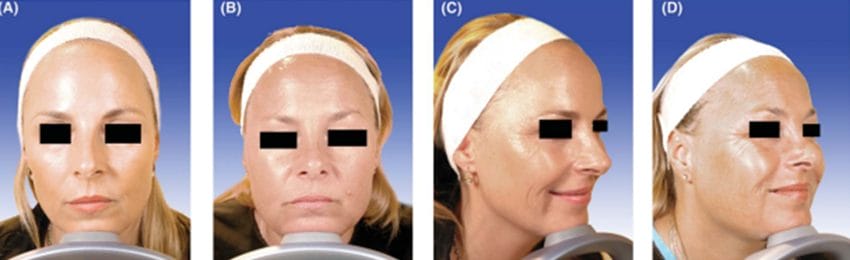
What makes this study stand out are the photographs. Images taken of the regularly treated twin show virtually no lines on her forehead or glabella when her face is at rest, and only mild lines around her eyes. Her skin texture appears smooth, with smaller pores. On the other hand, the sporadically treated twin shows more visible signs of aging: noticeable resting lines on her forehead and deeper lines around her eyes, along with a more pronounced skin texture.
This difference is not due to lifestyle or environmental factors, as both twins lead active lives outdoors, use high SPF sunblock, maintain a healthy diet, and work indoors. They haven’t undergone any other skin treatments like laser or light therapy and follow a similar skincare routine, primarily using glycolic-based products.
So what does this tell us about this treatment? Regular treatments seem to not only reduce the appearance of dynamic facial lines (those that appear with facial movements) but also limit the formation of static wrinkles (those visible at rest). The case of these twins beautifully illustrates the long-term aesthetic benefits of consistent treatments.
Moreover, this aligns with broader research showing high satisfaction rates among treated patients – generally between 85% to over 90%. But it’s not just about looking younger. Many find that they boost their mood, self-esteem, and overall quality of life.
In the realm of cosmetic procedures, Anti-Wrinkle treatments continue to be a popular choice, and this twin study gives us a clear reason why: it’s not just a quick fix for wrinkles, but a long-term investment in one’s appearance and wellbeing.
Reference: Rivkin, A. and Binder, W.J. (2015) ‘Long-Term effects of OnabotulinumtoxinA on facial lines,’ Dermatologic Surgery, 41(Supplement 1), pp. S64–S66. https://doi.org/10.1097/dss.0000000000000193.